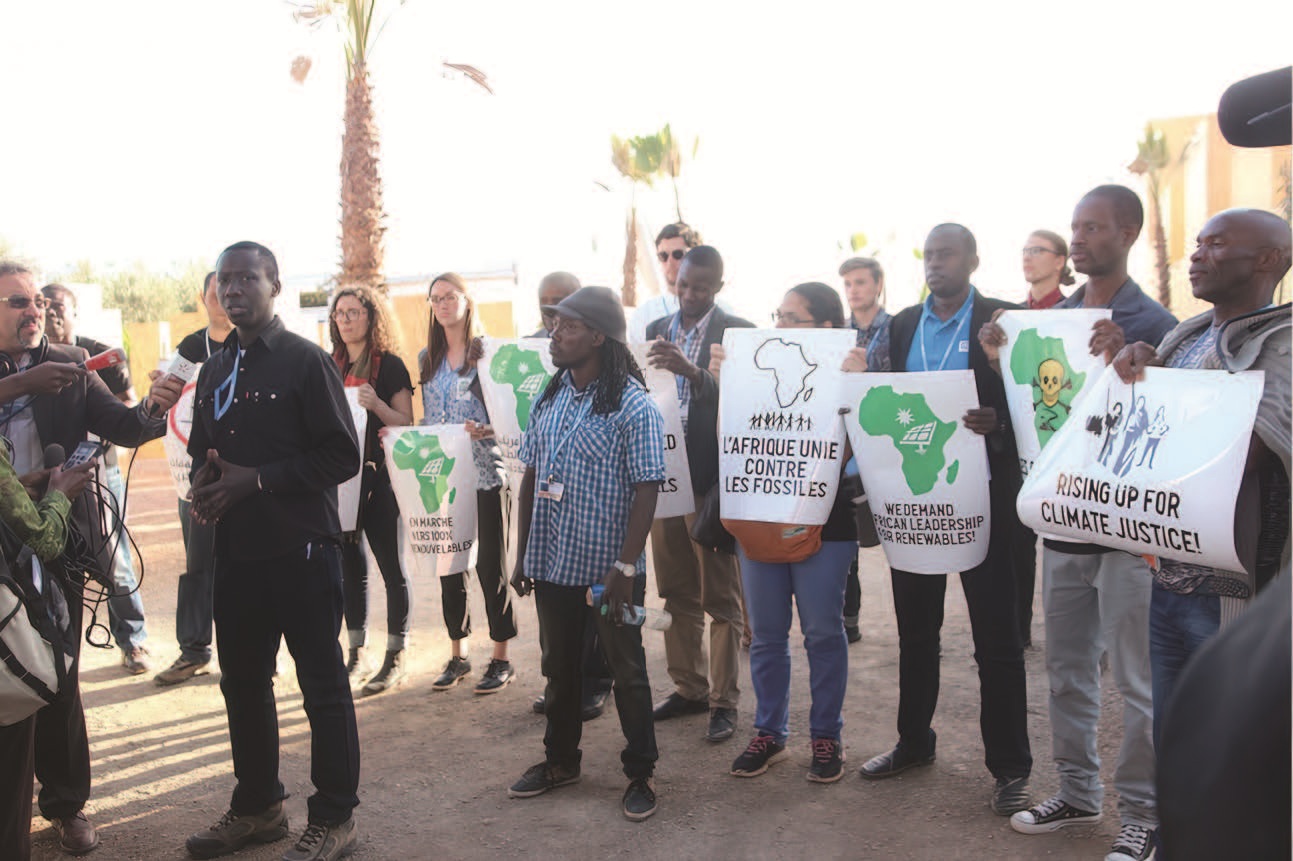





In a new report, Private Equity Climate Risks examines how the Global South is unfairly burdened by private equity’s investments in fossil fuels. While the Global North is responsible for the vast majority of excess emissions, communities of color in the Global South are hit hardest by the climate catastrophes caused by these emissions. These frontline communities are forced to bear the brunt of intensified disasters and ongoing pollution that devastate lives, uproot families, and drain financial resources. The World Economic Forum estimates that climate change will be responsible for an additional 14.5 million deaths and $12.5 trillion in economic losses by 2050.[1] Over 3.6 billion people, nearly half of the world’s population and overwhelmingly people of color residing in the Global South,[2] live in areas that are highly susceptible to climate catastrophe and the humanitarian crises that arise from failures to curb climate risk.[3]
In addition to wreaking climate havoc with disastrous human consequences, the private equity industry has put their own investors at risk by purchasing these risky fossil fuel assets. While these financial actors’ investors — such as public pensions and university endowments — hope to profit from these lines of business, the negative impacts may ultimately lead them to suffer from the risks of propping up polluting assets in the Global South. Because private equity portfolio companies usually remain privately held, the amount of information that private equity firms must relay to governments and stakeholders is limited. This reality often leaves investors in the dark. [4] [5]
PECR’s 2024 Climate Risk Scorecard report analyzed the extent to which 20[6] of the world’s top private equity firms are contributing to climate change through their investment in or even direct ownership of fossil fuel projects.[7] These firms range from diversified behemoths that invest in a wide variety of companies,[8] such as KKR[9] and Blackstone,[10] to specialized firms that invest in infrastructure or energy, such as Blackrock’s Global Infrastructure Partners[11] and Quantum Capital Group.[12] Of the 20 firms that were included in the Scorecard, 13 maintained investment in fossil fuel projects in the Global South through at least July 2025 through 29 portfolio companies. All 13 are primarily headquartered in the Global North, with the majority in the United States.
Map of private equity-owned fossil fuel assets in the Global South
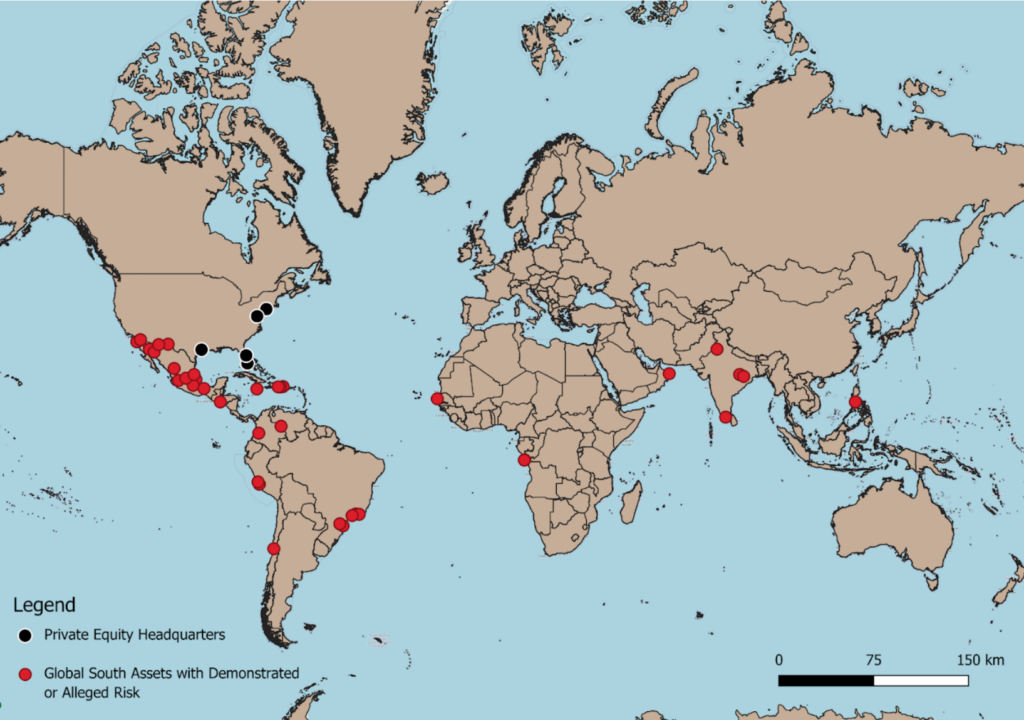
Of the nearly 600 fossil fuel assets in the PECR database—primarily certain midstream and downstream assets—that these private equity firms own, over one-fifth (123) are scattered across 32 countries in the Global South.[13] Among these, nearly half (57) had demonstrated economic, social, or environmental risks while owned by a private equity firm in this study.[14]
Read the full report to learn how the private equity industry endangers both the population of the Global South and their own investors with their risky fossil fuel investments.
[1] https://ourfinancialsecurity.org/wp-content/uploads/2022/09/Private-Equity-Hidden-Power-Plants-Threaten-Climate-5.16.22-official-2.pdfWorld Economic Forum. “Quantifying the Impact of Climate Change on Human Health,” January 16, 2024
[2] United States Census Bureau. “U.S. and World Population Clock”
[3] World Health Organization. “Climate Change and Health Factsheet,” October 12, 2023
[4] Kelleher, John C. “Internal rate of return: A cautionary tale.” August 1, 2004.
[5] Private Equity Climate Risks. “93 Million: The Carbon Emissions KKR Didn’t Disclose.” April 2024
[6] At the time of writing, 21 companies were covered in the 2024 scorecard. Since then, Blackrock purchased GIP.
[7] Private Equity Climate Risks “ 2024 Private Equity Climate Risks Scorecard Report.” October 2024.
[8] Valdes Viera, Oscar. Americans for Financial Reform Education Fund. “ABC’s of Private Equity.”
[9] KKR “Delivering Better Outcomes.”
[10] https://www.blackstone.com/
[11] https://www.global-infra.com/
[12] https://www.quantumcap.com/
[13] Private Equity Climate Risks. “The Private Equity Global Energy Trackers.” 2025.
Algeria, Bahrain, Bolivia, Brazil, Chile, Colombia, Dominican Republic, Dutch Antilles, El Salvador, Equatorial Guinea, French Caribbean, some marked “Global,” Guatemala, India, Indonesia, Jamaica, Jordan, Libya, Mexico, Nigeria, Oman, Panama, Peru, Philippines, Republic of Congo, Rwanda, Senegal, Togo, Trinidad and Tobago, United Arab Emirates, Venezuela, Vietnam
[14] The data is available to download at peclimaterisks.org
Authors
Dustin Duong and Hibba Meraay, Americans for Financial Reform Education Fund
Media Contact
Jarice Thompson, jarice@ourfinancialsecurity.org
Research
Dustin Duong led the research effort for this study. The foundation of this report was built on the 2024 PECR Climate Risks Scorecard dataset, which was jointly developed by the entire PECR team, including Dustin Duong, Aditi Sen, Oscar Valdés Viera, Alex Hurley, Alyssa Moore, Nichole Heil, Amanda Mendoza, and Alissa Jean Schafer. The PECR team advised research and analysis throughout the project. Americans for Financial Reform Education Fund is solely responsible for the content of this report.